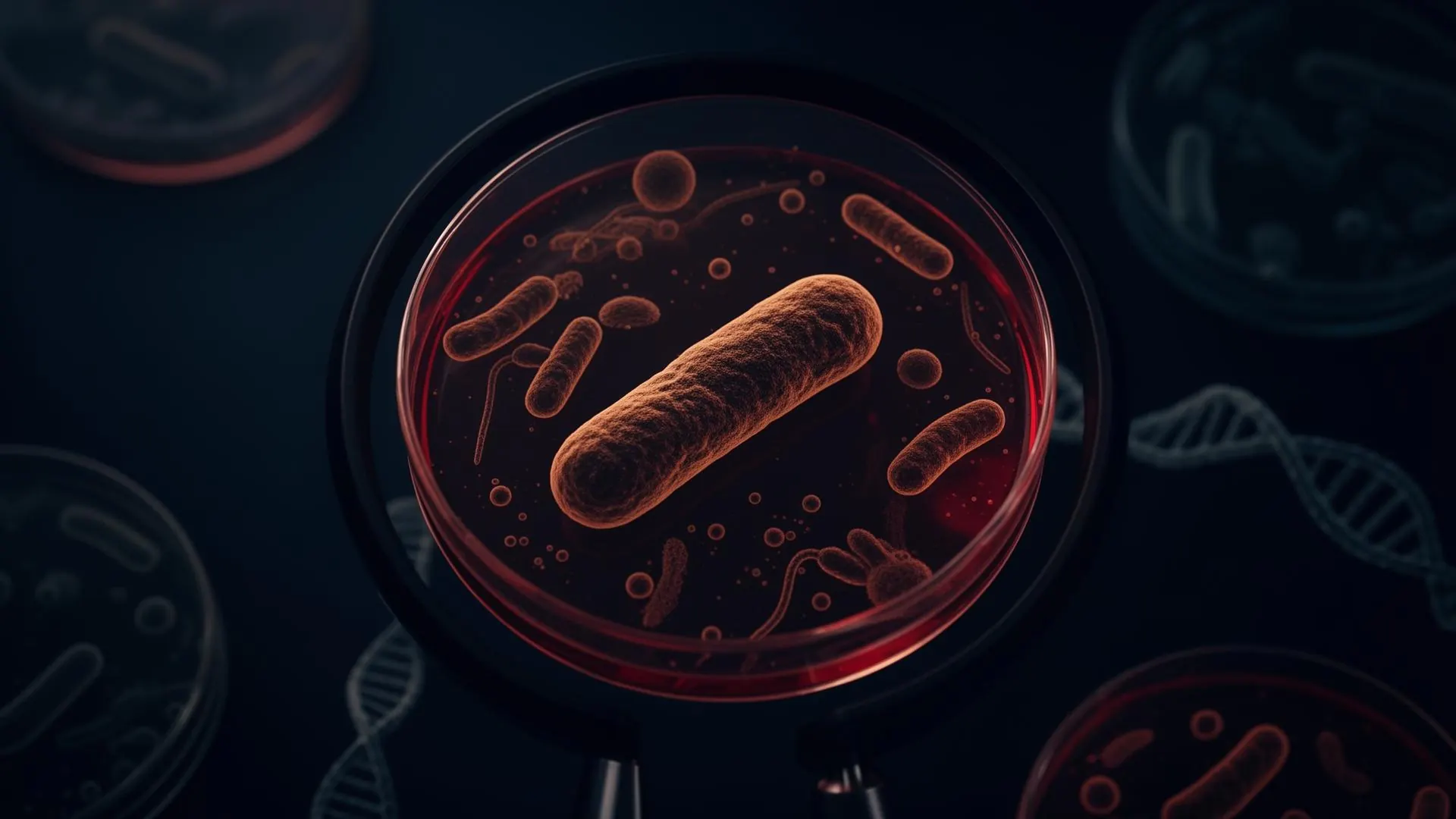
The Science of Probiotics
for the meat-based gut
The probiotic industry was built around a fiber-fed gut. A carnivore, lion, or strict ketogenic diet creates a fundamentally different intestinal environment. Here is the research on the three strains in Carnivore Biotics, and why the science looks different on a meat-based diet.
01 · The Premise
Four shifts happen when you stop eating fiber.
Move from a standard Western or Mediterranean diet to carnivore or strict keto, and the intestinal environment changes in measurable ways. Each shift reshapes which probiotics can actually function in there.
01
Bile output surges
Animal fat is the primary trigger for bile acid release. A diet centered on fatty cuts, butter, eggs, and tallow significantly raises the daily bile load passing through the small intestine. Bile acids are antimicrobial, and most probiotic strains cannot survive that environment.
02
Fiber drops to near zero
Standard probiotic protocols assume access to fructooligosaccharides, galactooligosaccharides, and resistant starches. On a carnivore diet, these are absent. Fiber-dependent strains lose their food source.
03
Microbiome composition shifts
Populations consuming high-protein, low-fiber diets show declining fiber-fermenting bacteria and a relative rise in protein and amino acid metabolizing populations.
04
Bile acid metabolism takes center stage
With more bile flowing through the system, bacteria that can metabolize bile salts via bile salt hydrolase (BSH) take on a larger functional role in the gut.
02 · The Strains
Three species.
Selected for a reason.
Each strain in Carnivore Biotics was chosen for a specific functional reason backed by published research.
Limosilactobacillus reuteri
The bile salt hydrolase specialist
Formerly Lactobacillus reuteri (renamed 2020). Among the most extensively studied probiotic species. For carnivore and keto contexts, the most relevant body of research is bile salt hydrolase activity.
The bile question
A 2008 study in Applied Microbiology and Biotechnology characterized L. reuteri as a high BSH producer relative to other tested probiotic species.
Jones et al., 2008 · DOI: 10.1007/s00253-008-1642-8
Mechanism of action
A 2021 study in World Journal of Microbiology and Biotechnology mapped how the BSH enzyme from L. reuteri CRL 1098 interacts with glyco- and tauro-conjugated bile acids via molecular docking.
Esteban-Torres et al., 2021 · PMID: 33591463
Broader research base
A 2023 study in iMeta classified Lactobacillus species by BSH phylotype and found L. reuteri encodes BSH-T3, which showed the highest in vitro deconjugation activity against conjugated bile acids.
Song et al., 2023 · DOI: 10.1002/imt2.128
Why this matters
A high-fat diet increases bile output. Strains that tolerate and metabolize bile are positioned to function in that environment, where strains without BSH activity would struggle.
Lacticaseibacillus rhamnosus
The tight-junction researcher's favorite
Formerly Lactobacillus rhamnosus (renamed 2020). The GG strain (LGG) is one of the most-researched probiotic strains in the world. The relevant research area for carnivore and keto eaters is intestinal barrier function.
Tight junction research
A 2018 Nutrients study examined LGG's effects on epithelial barrier integrity in jejunal tissue, finding it helped preserve expression of intercellular junction proteins under experimental challenge.
Orlando et al., 2018 · PMC6265991
Human cell models
A 2018 Gut Microbes study tested LGG on human intestinal enteroids and colonoids, examining effects on epithelial barrier function and tight junction protein expression.
Han et al., 2018 · DOI: 10.1080/19490976.2018.1479625
Newer mechanism research
A 2024 Cellular and Molecular Gastroenterology and Hepatology study identified a vitamin B3 metabolism pathway through which LGG appears to influence intestinal barrier integrity, with methylnicotinamide playing a barrier-protective role.
Wang et al., 2024 · DOI: 10.1016/j.jcmgh.2024.04.001
Why this matters
Removing dietary fiber changes the fuel source for many gut barrier-supporting bacterial populations. Research on strains studied for intestinal barrier function is directly relevant for people changing their diet substantially.
Lactobacillus gasseri
The body composition research strain
Studied across multiple research areas. For carnivore and keto contexts, the most cited body of work involves metabolic and adiposity research.
Visceral adiposity research
A 2010 RCT in European Journal of Clinical Nutrition studied L. gasseri SBT2055 in 87 adults with elevated BMI and visceral fat, followed by a larger 2013 multi-center RCT in British Journal of Nutrition with 210 Japanese adults.
Kadooka et al., 2010 & 2013
Fat absorption research
A 2015 study in Lipids in Health and Disease explored SBT2055's effects on pancreatic lipase activity and fecal fat excretion in a double-blind, randomized, placebo-controlled clinical trial.
Ogawa et al., 2015 · DOI: 10.1186/s12944-015-0019-0
Lipid metabolism research
Additional published research has examined SBT2055's relationship to postprandial fatty acid levels in subjects with elevated triglycerides.
Ogawa et al., 2014 · PMC3944925
Why this matters
Carnivore and keto eaters are often interested in body composition. The L. gasseri literature in metabolic and adiposity contexts was part of the strain selection. We make no body composition claims about our product.
Ready to Optimize?
GET THE CARNIVORE GUT HEALTH PROBIOTIC
03 · What to Expect
The transition,
week by week.
Common experiences from the first weeks of a carnivore, lion, or strict keto diet. We describe what people typically report so you know what is normal.
Week 1
Loose stools, fat-related changes
Often called transition diarrhea. When dietary fat intake jumps, bile production has to catch up. People typically report this resolves over 1 to 4 weeks as the body adapts.
Week 1-2
Bloating, gas, discomfort
As the microbiome shifts away from fiber-fermenting populations, byproducts of bacterial die-off and fermentation change. Commonly reported in the first 2 to 3 weeks.
Week 1-3
Reduced bowel frequency
With no plant fiber, stool composition changes. Frequency commonly decreases, which is normal on a low-fiber diet. Hydration and electrolytes matter most here.
Day 3-14
Keto flu
Fatigue, headache, mental fog, and irritability as the body shifts from glucose to fat metabolism. Electrolyte balance is the primary modifiable factor.
Week 4-12
Full fat adaptation
Most people report noticeable energy stability by week 4 to 6. Complete metabolic adaptation typically lands between weeks 4 and 12.
04 · Quality
Built in Canada.
Verified by regulators.
Health Canada licensed
NPN 80145666. The Natural and Non-prescription Health Products Directorate reviews each licensed product for safety, quality, and supporting evidence under the Natural Health Products Regulations.
GMP-certified manufacturing
Manufactured in a GMP-certified facility in North Vancouver, BC, Canada. Covers cleanliness standards, process controls, ingredient verification, and testing procedures.
Carnivore-aligned formula
Three Lactobacillus species in a delayed-release capsule. Zero carbs, zero sugar, zero fillers. No maltodextrin, no potato starch.
Delayed-release delivery
The capsule is designed to help live cultures travel past stomach acid and reach the small intestine, where bile metabolism and barrier interactions occur.
05 · FAQ
Frequently asked
science questions.
06 · Go Deeper
Keep researching.
Strains selected for the way
you actually eat.
Three Lactobacillus species. Delayed-release capsule. Zero fillers. Health Canada licensed.
Shop Carnivore BioticsThis product is not intended to diagnose, treat, cure, or prevent any disease. Always consult a qualified healthcare professional before starting any new supplement, especially if you are pregnant, nursing, taking medication, or managing a health condition.