Ancestral Eating: Reclaiming the Diet That Built the Human Race
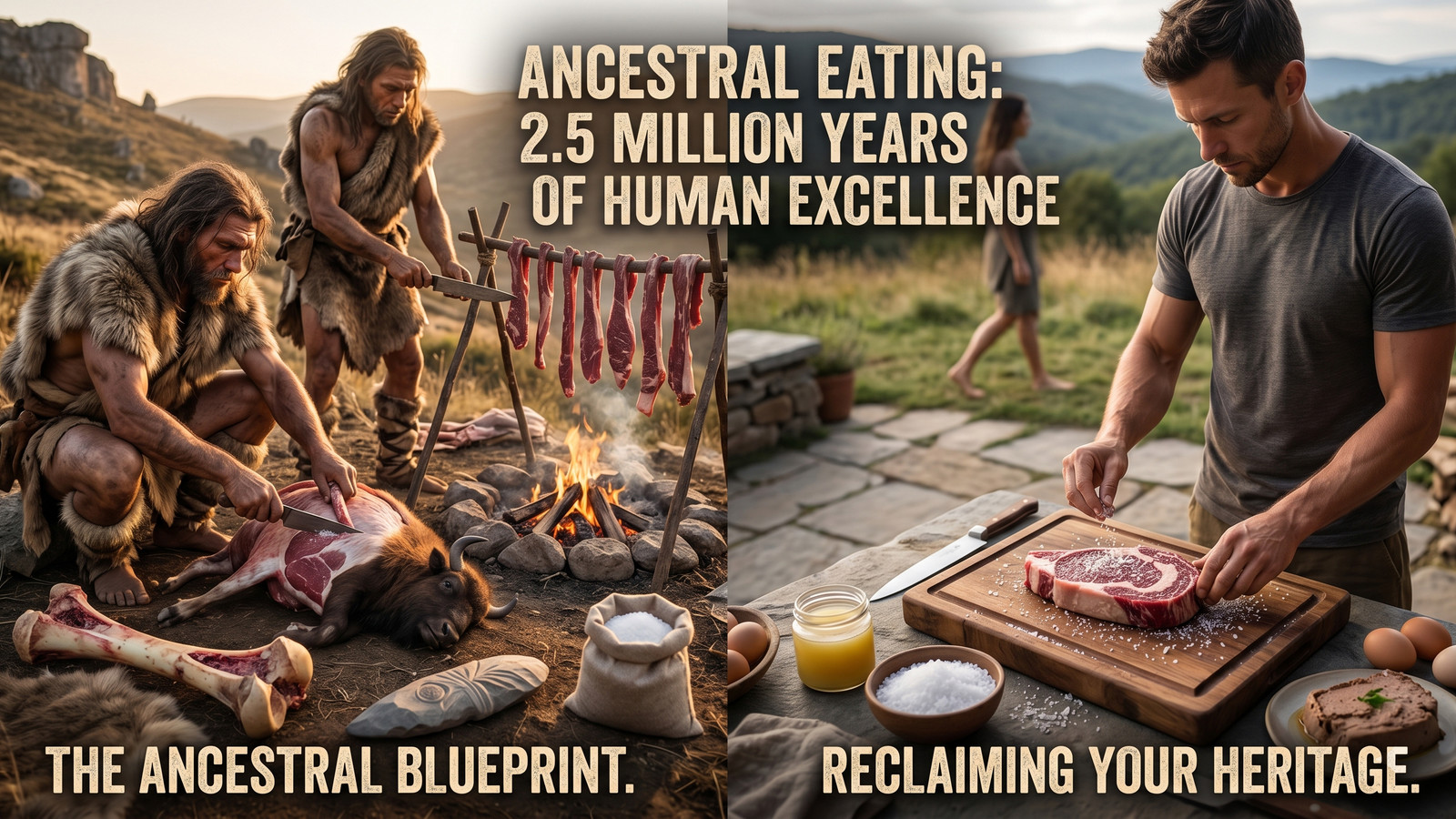
For 99% of our history, humans didn't struggle with obesity, Type 2 diabetes, or chronic autoimmune conditions. We didn't count calories, and we didn't look at food labels. We ate what we were biologically designed to eat.
Ancestral Eating is not a "diet trend"—it is a return to the species-appropriate lifestyle that allowed the human brain to grow and our species to thrive for over 2.5 million years.
1. The 99% Rule: Our Genetic Reality
The genus Homo has been on this planet for roughly 2.5 million years. For 99.6% of that time, we were hunter-gatherers. The Agricultural Revolution (farming) only began about 10,000 years ago, and the Industrial Food Revolution (seed oils and refined sugars) is a mere blip of 100 years.
Our DNA is virtually identical to that of our ancestors. Our bodies are still expecting the nutrient-dense fats and proteins of the Great Hunt, yet we are feeding them "evolutionary mismatches" like processed grains and lab-made chemicals.
2. The Great Hunt: Life as an Apex Predator
Our ancestors were not "gatherers who occasionally found meat." We were apex predators who thrived by hunting large, fatty ruminant animals. Every part of the animal was a vital resource for survival:
Meat and Organs: We ate the "nose-to-tail" spectrum. Organ meats like liver and heart provided the multivitamins, while the muscle meat provided the building blocks for strength.
The Power of Fat: Fat was our most prized resource. We used it for immediate energy, cooked with it, and used it to preserve meat so it would last through lean times.
Bone Broth & Tools: We cooked bones to extract minerals and collagen (the original bone broth). The leftover bones were then carved into the very weapons and tools that ensured our next meal.
Fur & Shelter: The hides became our clothing and our homes, protecting us from the elements.
3. Preservation and Mineral Wisdom
Before refrigeration, our ancestors relied on the Earth’s minerals to survive. Salt was as valuable as gold. It was used to cure and dry meat, allowing a single kill to sustain a tribe for months. This traditional use of salt ensured our ancestors maintained the electrolyte balance necessary for high-intensity hunting and survival in harsh climates.
4. Lessons from Ancestral Populations
We don't have to guess how this diet affects humans; we can look at the populations that maintained these traditions into the modern era:
The Inuit: Living in the Arctic, they thrived on a diet of nearly 100% animal fat and protein (seal, whale, and fish), exhibiting incredible cardiovascular health.
The Maasai: These East African warriors traditionally lived on meat, blood, and milk, resulting in exceptional stature and a total absence of modern metabolic disease.
The Hadza: One of the last remaining hunter-gatherer tribes, showing us that a life without processed sugar leads to a diverse and resilient gut microbiome.
5. Beyond the Plate: The Ancestral Lifestyle
Ancestral health is more than just what you put in your mouth; it’s about how you interact with the world.
Ancestral Movement
Our ancestors didn't "exercise" in a gym. Their lives required Functional Movement: miles of low-level walking (tracking), occasional heavy lifting (carrying the kill), and short bursts of sprinting. To be truly healthy, we must move our bodies in these varied, natural ways.
Grounding and the Sun
We evolved with our feet in direct contact with the Earth—a practice now called Grounding or "Earthing"—which helps regulate inflammation and stress. Furthermore, our ancestors lived by the sun. They woke with the light and slept with the dark, keeping their circadian rhythms and hormones in perfect sync.
6. Nutrient Density & Bioavailability
The most important lesson of ancestral eating is Bioavailability. While plants contain nutrients, they are often locked behind "anti-nutrients" like lectins and oxalates. Animal-sourced nutrients (like Vitamins A, D3, and K2) are in the exact form the human body can use immediately. By prioritizing animal foods, you are getting the most "bang for your buck" in every bite.
7. Reclaiming Your Heritage
You don't have to live in a cave to eat ancestrally. In the modern world, this means:
Shop the Perimeter: Stick to the meat, eggs, and healthy fats.
Avoid the "Big Three": Eliminate seed oils, refined sugars, and processed grains.
Prioritize Ruminants: Choose beef, lamb, and bison as your foundation.
Get Outside: Walk, lift heavy things, and get some sun on your skin.
Ancestral eating is a journey back to yourself. It is the path to reversing the "Diseases of Civilization" and finally giving your body the fuel it has been waiting for for two million years.
Are you ready to eat like your life depends on it?